

Malachi Key
Climate Justice Coordinator, Chemical Recycling Program
Happy Plastic Free July! This month at Air Alliance Houston (AAH), we’re celebrating this unique holiday by working to use as little plastic as possible. As we consider the most effective ways to reduce the negative impact plastic is having on our planet, our communities, and our bodies, we also want to take a look back at a plastic reduction strategy that has unfortunately proven to NOT be effective: The Houston Recycling Collaboration (HRC) and so-called “chemical” or “advanced” recycling.
Let’s revisit this boondoggle of a recycling program:
At the beginning of this year, we commemorated the HRC’s fourth year in existence. If the program worked as planned, these should have been four years of better, more efficient waste management that served the people of Houston. Instead, they were marked by plastic piling up, waste being moved around like a shady carnival game, and repeated delays. So, six months later, has anything gotten better? Did the HRC manage to pull off a miracle and start working as intended? Not quite.
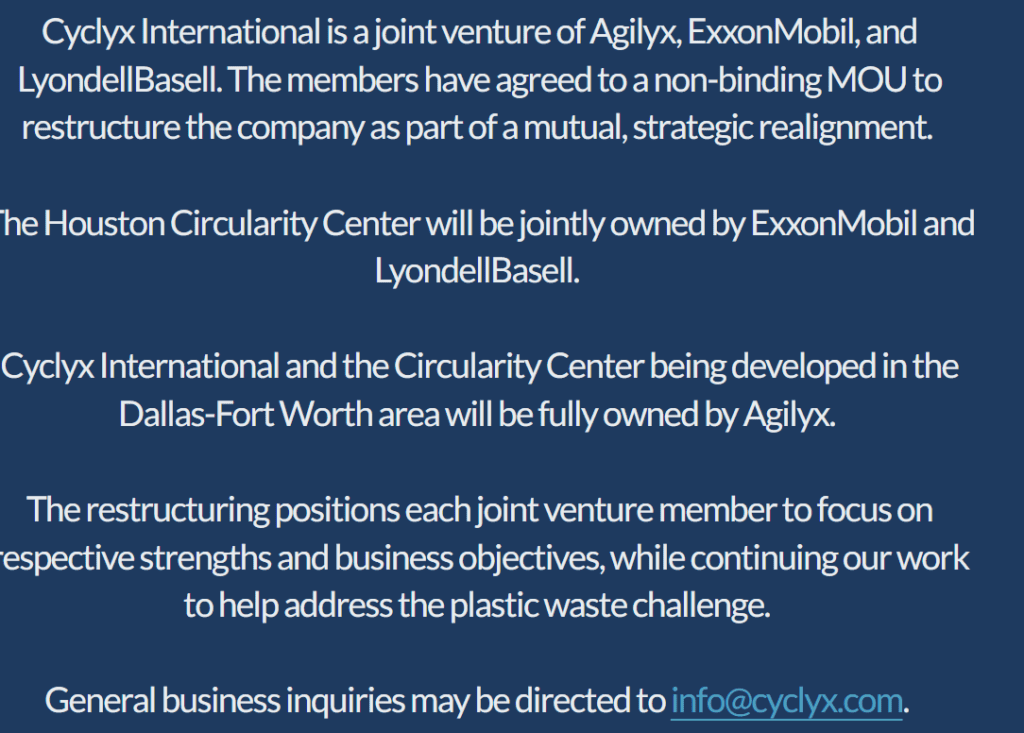
Instead, the project’s initial sponsor, Agilyx, pulled out of the HRC this past February, citing a desire to focus more on their projects in the European market. Agilyx was responsible for providing the initial investment and technology needed to open the Cyclyx circularity center. This center was meant to process plastic collected at the Houston Recycling depositories, which would then be transported to “chemical advanced recycling” centers owned by Lyondell Basell and Exxon Mobil. This marks the second departure of a partner from the HRC, with FCC Environmental exiting in July 2023 over “safety and environmental concerns.”
With just Lyondell Basell and ExxonMobil remaining as part of the agreement with the city of Houston, it seems unlikely that the project will have the resources needed to finally become operational. The Cyclyx website now redirects to a page declaring that ownership of the center will now be jointly handled by the remaining partners in the HRC.
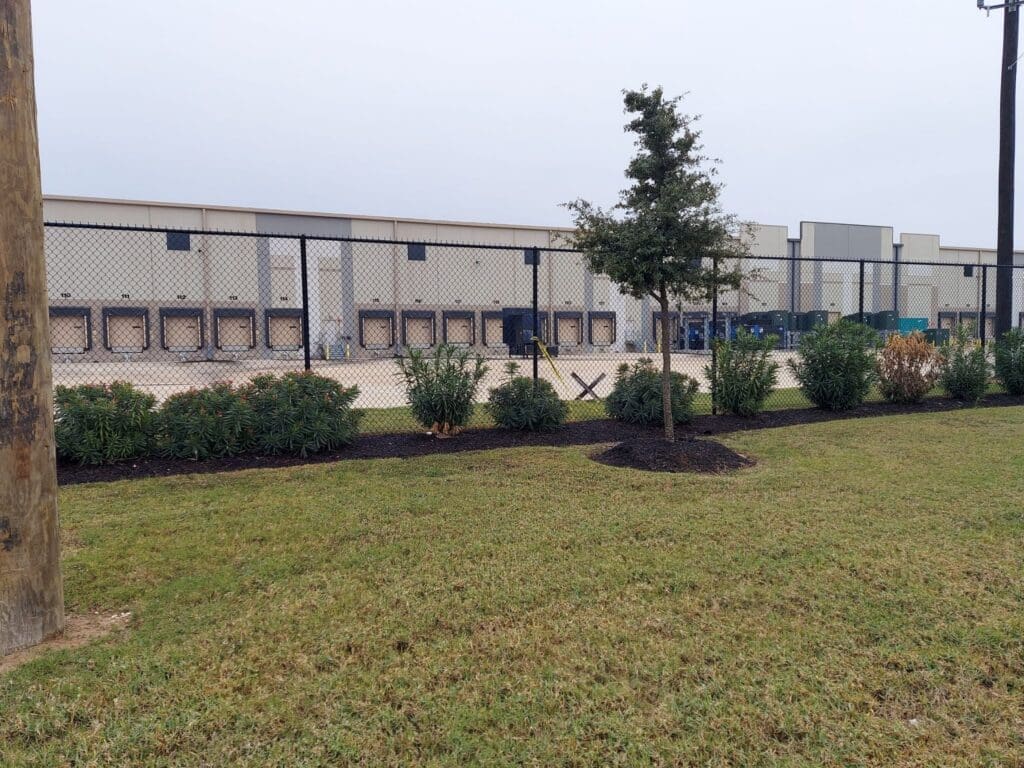
But even when Agilyx was managing the center, it was far from functional. AAH staff have made multiple visits to the Cyclyx site over the past few months, and have continued to note little to no activity around the building. This is despite promises that the center would begin operating in 2024. Similarly, the LyondellBasell facility in Pasadena that was meant to “recycle” plastic after it left Cyclyx has still not opened.
These issues should not come as a major surprise. So-called “chemical or advanced recycling” has a lengthy track record of overpromising and under delivering, with multiple projects across the country failing over the past several years. With so many problems piling up, it would only make sense for the city of Houston to cut its losses and formally and finally cease its involvement in chemical recycling as a whole by ending the HRC once and for all.
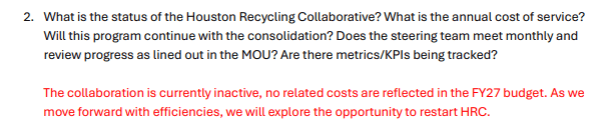
Luckily, multiple Houston City Council members have informed AAH that the HRC is “currently inactive,” with plastic from the recycling depositories that was stockpiling at Wright Waste Management now being handled by FCC Environmental, or transported to landfills. While adding to our landfill isn’t the ideal solution (reducing single-use plastic from the start is the only true option), these are still better options than “chemical advanced recycling,” which emits known cancer-causing emissions into the air. Representatives of the Solid Waste Management Department also noted that there is currently no budget allocated to the program for 2027.
We at AAH appreciate the city representatives who listened to community concerns and acted to shutter this program. However, it’s worth noting that this program was allowed to operate ineffectively, continuously fall behind schedule, and dump Houstonian’s “recycled” plastic in a highly-flammable environment directly bordering a neighborhood park for FOUR years. What’s more, the program was not ended with any public announcement or apology, but instead with quietly changing signs and short emails to advocates that the program was “effectively inactive” and no details on how they planned to better handle Houston’s recycling moving forward. In contrast, city officials left open the option of “restarting the HRC” at a future date.
Restarting this program in ANY form would be a step backwards. While the HRC might have been momentarily shelved under this current administration, it’s not impossible that a new mayor could be drawn in by the shiny promises of “chemical advanced recycling” in a few years. Instead of not learning from its mistakes, the city of Houston has a chance to take a stand here and now. We at AAH encourage adopting an ordinance that would prevent ANY city money being allocated to this false solution. Let’s keep past mistakes in the past, and instead turn our focus towards real solutions to the plastic crisis.
Speaking of! Stay tuned for updates on how we’re doing with our pledge for Plastic Free July in a future post.
Interested in learning more about chemical recycling? Check out some of our other links:
- It’s Plastic Free July!
- Houston’s Failed and Dirty Chemical Recycling Program Turns 4
- CHEMICAL “RECYCLING” A FALSE SOLUTION TO THE PLASTIC CRISIS IN HOUSTON, information sheet
Get involved as a community member: Join our Facebook group Houston is NOT Disposable. As part of our vision for clean air, every day for everyone, you will not only campaign against industrial pollution but also learn practical ways to minimize plastic usage in your daily lives. You’ll also be the first to know when there’s an opportunity to make a difference.
Get your organization involved: Air Alliance Houston is the founder and facilitator of the Houston Coalition Against Chemical Recycling (H-CACR). If your organization would like to join other like-minded groups in Houston to push back against this polluting technology, reach out to us at [email protected]. The Coalition meets virtually every other month.
Air Alliance Houston is a proud member of the Break Free From Plastics Movement and the Beyond Plastics campaign.