
AirMail - Concrete Batch Plant/Aggregate Processing Permits
Open Concrete Batch Plant and Other Aggregate Processing Permit Applications
Do you have questions or need more help creating your comments? Email us at [email protected]. We may also be able to support/represent you if you are interested in participating in a hearing to challenge this permit.
Please make sure to contact your elected officials about your concerns regarding this proposed facility. They have networks and influence to effect change, but they need to hear from you first! Not sure who represents you? Check here.
Zamcrete Ready-Mix: New Air Quality Permit No. 178220
Zamcrete Ready-Mix LLC has applied to the Texas Commission on Environmental Quality (TCEQ) for an Air Quality Permit, Registration Number 178220, which would authorize the operation of a permanent concrete batch plant at 295 Holmes Road, Houston, Harris County, Texas 77045.
The facility emits the following air contaminants: volatile organic compounds (VOCs), and particulate matter including (but not limited to) aggregate, cement, and road dust.
Immediate actions and help documents:
⚠️ ACTION: Submit public comments
Resources:
⚠️ ACTION: Contact YOUR representatives to request a public meeting
The area surrounding the Zamcrete facility encompasses a number of districts. We recommend that you contact YOUR representatives, which may be listed below:
State Representative, House District 131: Alma Allen 713-776-0505
State Representative, House District 146: Lauren Simmons 713-234-6010
State Senator, District 13: Borris Miles 281-261-2360
State Senator, District 15: Molly Cook 713-864-8701
To find our who your representatives are, click here.
Resources:
Elected Officials Call Script
“Hi, my name is ___________ and I reside in your district.
Zamcrete Ready-Mix is proposing to operate a concrete batch plant near me.
Tell your representative why the issue is important to you. Include a personal story about how it affects you, your family and/or your community.
Please submit public comment to TCEQ and request a public meeting so that our concerns can be heard.”
E Z Waste Inc: Air Quality Permit No. 182699
E Z Waste Inc. has applied to the Texas Commission on Environmental Quality (TCEQ) for an Air Quality Permit, Registration Number 182699, which would authorize the operation of a permanent concrete crushing facility located near 10217 Wallisville Rd, Houston, Texas 77013.
The facility emits the following air contaminants: volatile organic compounds (VOCs), and particulate matter including (but not limited to) aggregate, cement, and road dust.
Immediate actions and help documents:
⚠️ ACTION: Submit Public Comments
Resources:
⚠️ ACTION: Contact your representatives to submit comment and request a public meeting
State Representative: Harold Dutton 713-692-9192
State Senator: Carol Alvarado 713-926-6257
Resources:
Elected Officials Call Script
“Hi, my name is ___________ and I reside in your district.
E Z Waste is proposing to construct a concrete crusher near me.
Tell your representative why the issue is important to you. Include a personal story about how it affects you, your family and/or your community.
Please submit public comment to TCEQ and request a public meeting so that our concerns can be heard.”
Concrete Pros Ready Mix Inc: Air Quality Permit No. 131789 Renewal
Concrete Pros Ready Mix Inc. has applied to the Texas Commission on Environmental Quality (TCEQ) to renew their Air Quality Standard Permit for Concrete Batch Plants, Registration Number 131789, which would authorize the continued operation of the permanent concrete batch plant located at 4005 Swingle Road, Houston, Harris County, Texas 77047.
The facility emits the following air contaminants: particulate matter including (but not limited to) aggregate, cement, and road dust.
Immediate actions and help documents:
⚠️ ACTION: Submit Public Comments
Resources:
Read more about concrete batch plants and how to submit a public comment.
If you live within 0.25 miles of the facility, we highly recommend requesting a Contested Case Hearing. Here is a guide on how to request a Contested Case Hearing.
⚠️ ACTION: Contact your representatives to submit comment and request a public meeting
State Representative: Alma Allen 713-776-0505
State Senator: Borris Miles 281-261-2360
Resources:
Elected Officials Call Script
“Hi, my name is ___________ and I reside in your district.
Concrete Pros Ready Mix is attempting to renew their permit for a concrete batch plant near me.
Tell your representative why the issue is important to you. Include a personal story about how it affects you, your family and/or your community.
Please contact TCEQ to request a public meeting and a contested case hearing so that our concerns can be heard.”
Heidelberg Materials Southwest LLC: New Air Quality Permit No. 182311
Heidelberg Materials Southwest LLC has applied to the Texas Commission on Environmental Quality (TCEQ) for an Air Quality Standard Permit for Concrete Batch Plants, Registration Number 182311, which would authorize the operation of a permanent concrete batch plant located at 11206C Gifford Hill Road, Houston, Harris County, Texas 77041.
The proposed facility will emit the following air contaminants: particulate matter including (but not limited to) aggregate, cement, and road dust.
Immediate actions and help documents:
⚠️ ACTION: Submit public comments by April 21, 2026
Resources:
⚠️ ACTION: Attend the Public Meeting
Thank you to all who requested a public meeting and contacted elected officials. A public meeting has been scheduled by TCEQ.
- Date: Tuesday, April 21, 2026
- Time: 7:00 PM
- Location: Kirk Elementary School (CAFE 804 Room), 12421 Tanner Road, Houston, TX 77041
G & S Concrete Inc: New Air Quality Permit No. 182709
G & S Concrete Inc. has applied to the Texas Commission on Environmental Quality (TCEQ) for an Air Quality Standard Permit for Concrete Batch Plants with Enhanced Controls, Registration Number 182709, which would authorize the operation of two permanent concrete batch plants located at 6425 Stockdick School Road, Katy, Texas 77449.
The proposed facility will emit the following air contaminants: particulate matter including (but not limited to) aggregate, cement, and road dust.
Immediate actions and help documents:
⚠️ ACTION: Submit public comments by May 14, 2026
Resources:
⚠️ ACTION: Attend the Public Meeting
TCEQ has scheduled a public meeting. Representatives from TCEQ and R&S Concrete will be there to answer questions, and there will be opportunity to submit public comment.
- Date: Thursday, May 14, 2026
- Time: 6:00 PM
- Location: VFW Post 9182, 6206 George Bush Drive, Katy, TX 77492
717 Construction LLC: New Air Quality Permit No. 181802
717 Construction Services LLC has applied to the Texas Commission on Environmental Quality (TCEQ) for a New Source Review Air Quality Permit, Registration Number 181802, which would authorize the construction of a new permanent rock crusher located near 5251 Ransom Road, Richmond, Fort Bend County, Texas 77469.
The proposed facility will emit the following air contaminants: particulate matter including (but not limited to) aggregate, cement, and road dust.
Immediate actions and help documents:
⚠️ PERMIT UPDATE:
Thank you to all who submitted comments and contacted elected officials. The public comment period has ended, and we are now waiting for TCEQ to schedule a public meeting. Check this page for updates.
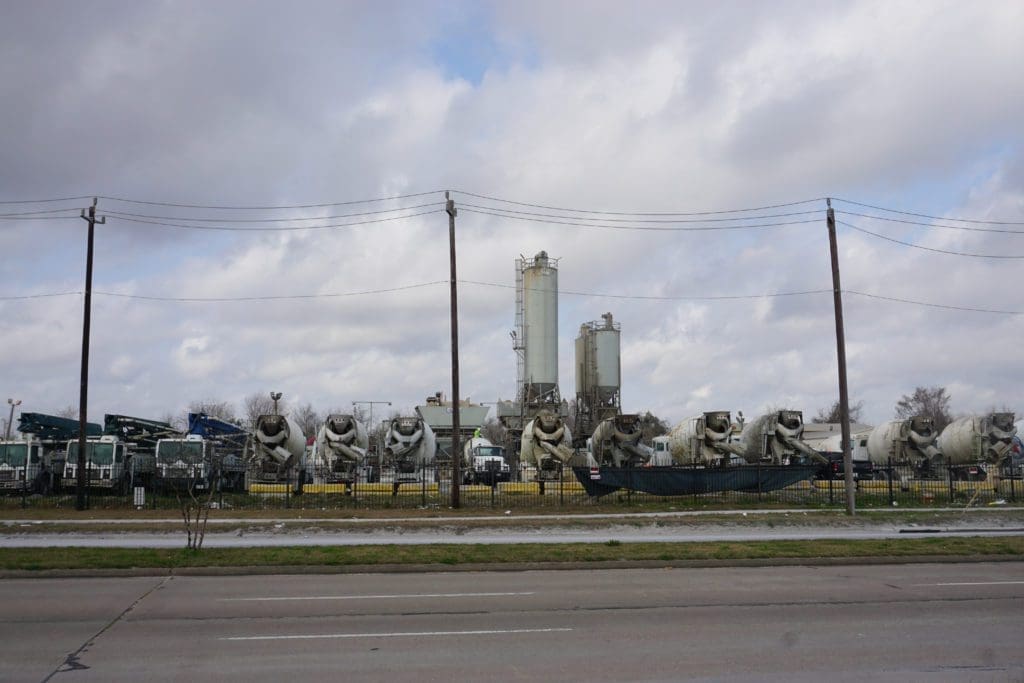
What are Concrete Batch Plants and why are they an air quality concern?
Concrete batch plants are facilities that mix cement, sand, and aggregates with water to create the concrete used to construct bridges, buildings, roads, and more. While these projects are often necessary, living near one of these facilities can significantly impact your health and quality of life in a number of ways. Currently, there are no meaningful restrictions on where these facilities are constructed relative to homes, schools, parks, and other places where people live, work, and play.
While concrete batch plants are the most common aggregate-processing facility in Houston, there are other types of facilities that process aggregates and have similar concerns. These include asphalt plants, hot mix asphalt plants, and concrete crushers.
Concrete batch plants (and other aggregate processing) produce a lot of dust, especially the smallest and most difficult to detect dust, known as fine particulate matter, or PM2.5. These particles are able to penetrate deep into the lungs and may enter your bloodstream. This kind of pollution can pose serious health risks:
- It can lead to heart and lung disease, as well as cancer, and is known to affect lung development in children;
- Is known to trigger or worsen chronic diseases such as asthma, heart attack, bronchitis, and other respiratory problems;
- Has been associated with a higher risk for birth defects when pregnant people are exposed;
- It may cause immediate or delayed irritation
Concrete batch plants (and other aggregate processing) significantly increase the presence of heavy-duty vehicles on neighborhood roadways. The noise, traffic, wear and tear of local roadways makes living and travel for residents unsafe and unbearable. Diesel-fueled vehicles within the heavy-duty fleet emit black carbon and nitrogen oxide into residential neighborhoods. Diesel exhaust contains both very small particles and 40 chemicals that are classified as “hazardous air pollutants” under the Clean Air Act. The pollution in the exhaust can aggravate asthma and allergies, as well as cardiovascular and respiratory disease. Vehicle emissions are still present and harmful even when you can’t see the exhaust.
If the facility operates 24 hours a day, 7 days a week, as would be allowed by the permit, you may be subject to 24/7 exposure to harmful air pollutants that can exacerbate existing health conditions.
The TCEQ’s spotty history in regulating Concrete batch plants (and other aggregate processing) facility operations creates uncertainty around any CBP’s ability to operate responsibly and prevent anticipated impacts to nearby residents. In 2021, Harris County Pollution Control issued over 80 violation notices after conducting 149 inspections of Harris County concrete batch plants (and other aggregate processing).
In Harris County, concrete batch plants (and other aggregate processing) are predominantly located in communities of color and with lower incomes. Some of these facilities are located in residential areas and neighborhoods, close to schools, parks, and homes. The surrounding residents are shouldered with the burden of breathing dust and polluted air.
Please note: While we encourage you to bring up any concerns when challenging a permit, please keep in mind that the TCEQ will be concerned with air pollution impacts to health and environmental welfare. We recommend that you focus your arguments on the possible impacts to your health and quality of life.