
Dr. Inyang Uwak
Research and Policy Director
In March 2025, the US Environmental Protection Agency (EPA) announced 31 planned deregulatory actions, with the primary goal of rolling back regulations for oil and gas and coal facilities and abandoning its mission to protect human health and the environment. These deregulatory actions will impact the health and well-being of the most vulnerable in our society. The excuse has been that these actions create more jobs and strengthen the economy; this is a false narrative. A recent study found that reductions in air pollution are beneficial not only for health but also for the economy.
I started writing this blog while attending a conference focused on children’s health. As I listened, the speaker highlighted ideal outdoor spaces for children to explore and the positive effects of these spaces on children’s health and development. I couldn’t agree more; however, at that moment, I thought of children in East Houston. Particularly those near the Houston Ship Channel, who live and/or attend school near a polluting facility, and the potential impact exposure to these pollutants would have on their health, both now and in the future.
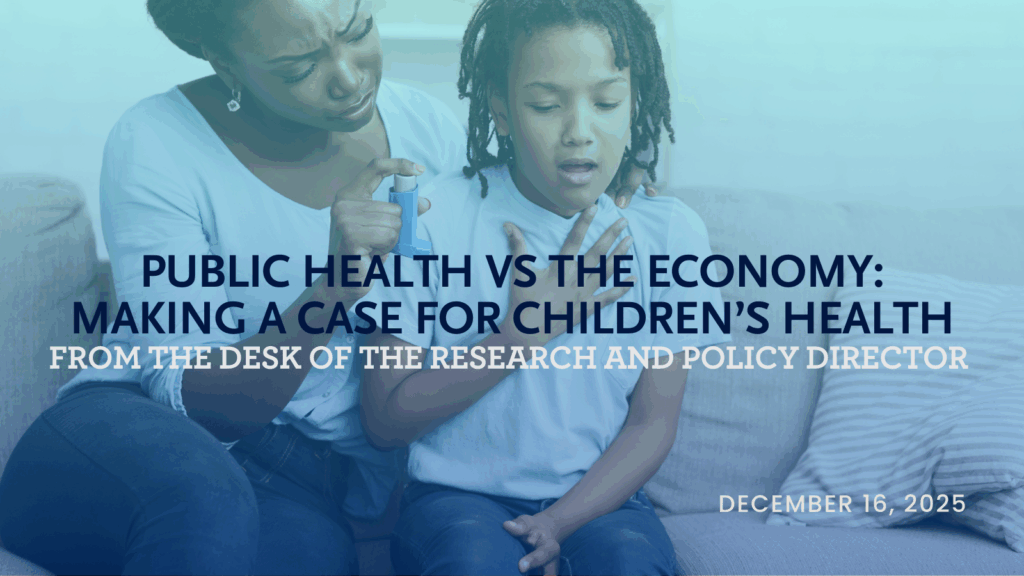
Exposure to air pollutants has been linked to several health problems, including respiratory diseases, neurodevelopmental disorders, childhood cancers, and poor birth outcomes. Children are especially vulnerable because their bodies are not only small but also still developing; therefore, it is crucial to protect them from exposure to harmful pollutants in the places where they live, learn, and play. With the EPA’s planned rollback of environmental protections and regulations, we must consider how this affects the most vulnerable population – children.
Most recently, on November 24th, 2025, the US EPA requested that the DC Circuit vacate the 2024 PM2.5 standard of 9 μg/m3, returning us to the 2020 PM2.5 standard of 12 μg/m3. Why is this a concerning move? This is because PM2.5 is a very tiny particle and a criteria pollutant that can readily bypass respiratory barriers and enter the bloodstream. It has been associated with several health impacts, including respiratory diseases, cardiovascular diseases, neurological disorders, and cancers. Additionally, the Clean Air Act requires the EPA to perform a thorough scientific review of the air quality standards every five years to ensure they adequately protect public health. That’s why the previous EPA conducted the review: the decision was based on robust scientific evidence to strengthen the standard to 9 μg/m3, which is more protective of public health.
Another regulatory policy slated for rollback by the US EPA, announced in August 2025, is the 2009 Endangerment finding on greenhouse gases, which concluded that greenhouse gases are pollutants regulated under the Clean Air Act and endanger public health and welfare. If this passes, the regulation of greenhouse gases from transportation, fossil-fuel-powered plants, and the oil and gas sectors will end. This is concerning in a city like Houston, where over 47% of GHG emissions come from transportation alone. Who will be among the most impacted by these emissions? The most vulnerable in our society – children. A recent study on the effectiveness of vehicle emission regulations and traffic-congestion reduction actions in improving birth outcomes in Texas found that the cumulative effects of long-term national regulations aimed at reducing tailpipe emissions were more effective at decreasing adverse birth outcomes. In September, the National Academies of Science, Engineering, and Medicine (NASEM) released a consensus report confirming the EPA’s 2009 finding that human-caused greenhouse gas emissions do indeed threaten human health and welfare.
As we close out 2025, amid all the festivities, let us remember that we can have a strong public health system and a strong economy if we all work together, rather than working against each other. There is no need to sacrifice public health vis-à-vis children’s health for economic gain. Let us reflect on the impact of these rollback policies on children’s health. Let us reflect on the cumulative impact an increase in all these harmful air pollutants would have on children’s lungs. Finally, this year, the White House released a “Make American Children Healthy Again” report; however, these deregulatory actions by the US EPA will only endanger children’s health. Let us reconsider these rollbacks for the sake of the children.
Wishing y’all a healthy holiday.
About Air Alliance Houston
Air Alliance Houston believes everyone deserves to breathe clean air. We support communities as they advocate for clean air and their health. For decades, we have championed clean air through research, education and advocacy. www.airalliancehouston.org