
Dr. Inyang Uwak, DrPH, MPH, MD
Research and Policy Director
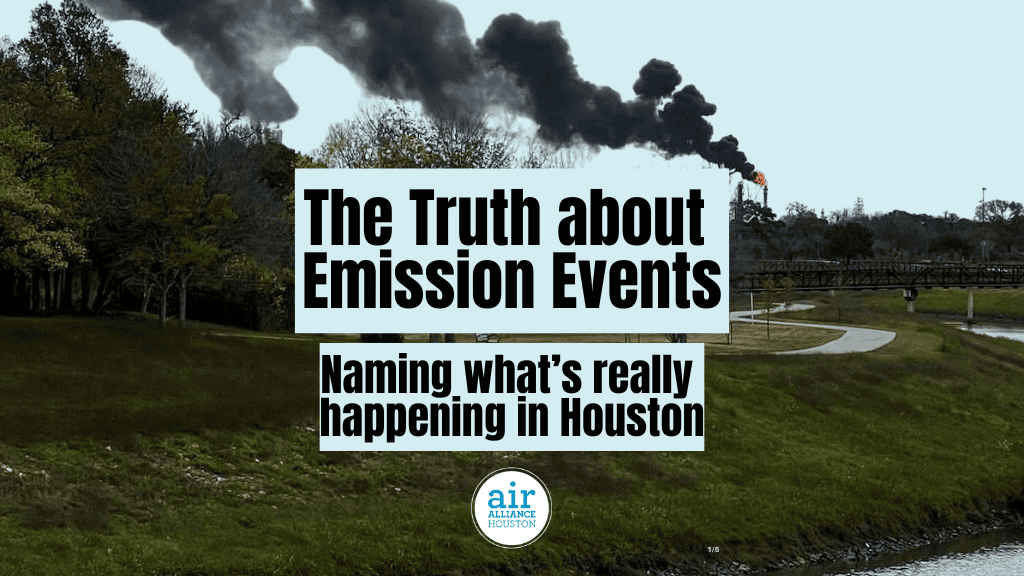
This series is in conjunction with our upcoming report, "Emissions Events in Harris County, 2017-2024."

An air emission event happens when there is an accident, explosion, fire, or certain work activities—like starting up or shutting down equipment—that release pollution into the air that is not allowed. This pollution is outside of what a facility normally releases every day. Because this pollution is extra, companies are required to report these events separately.
When these emission events happen, it can be easy to look at them one by one and miss the bigger picture. But in Harris County, fires, accidents, and explosions happen again and again, disrupting the lives of nearby residents. This report from Air Alliance Houston looks at these events together to better understand the larger problem behind them.
To do this, we used data from the Texas Commission on Environmental Quality’s Air Emission Inventory Database. We studied emission events in Harris County from 2017 to 2024. We started with 2017 because Hurricane Harvey caused a large amount of industrial pollution that year. This time period also covers two different presidential administrations, which helps show pollution patterns over time.
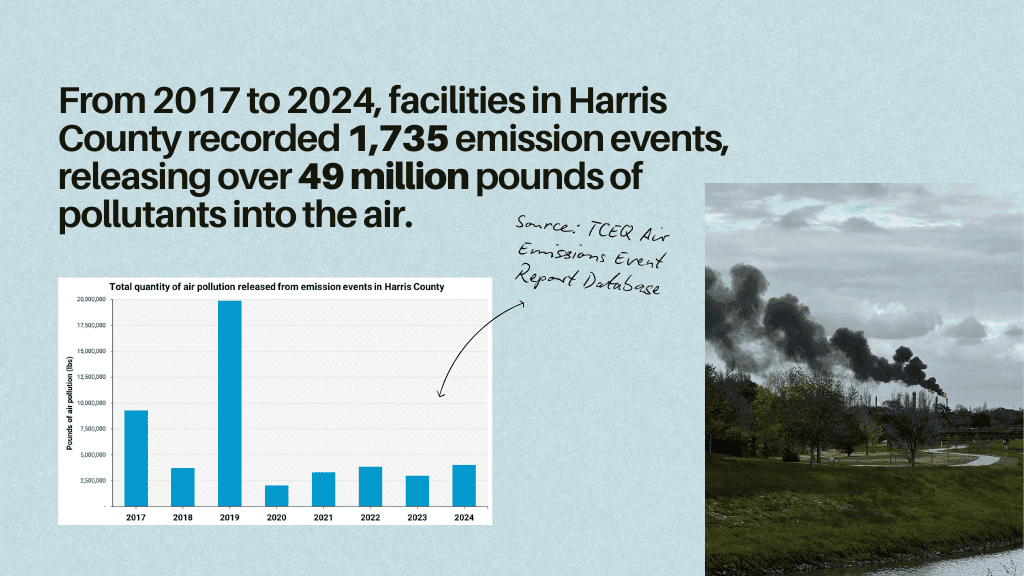
The amount of pollution changed from year to year. While many events were caused by equipment failures, a large number also happened during extreme weather, such as hurricanes and winter storms. This upcoming report looks more closely at those weather-related events.
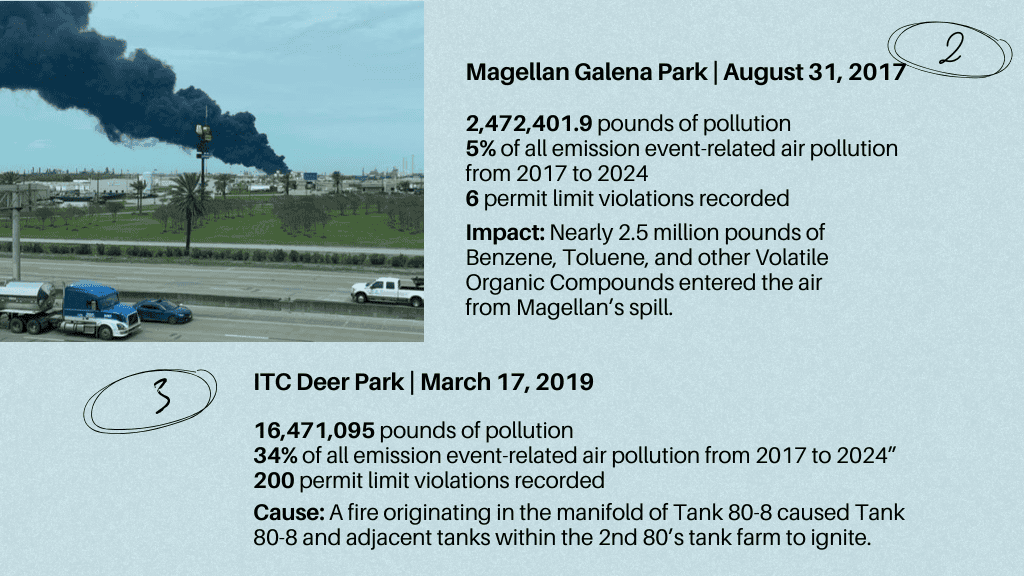
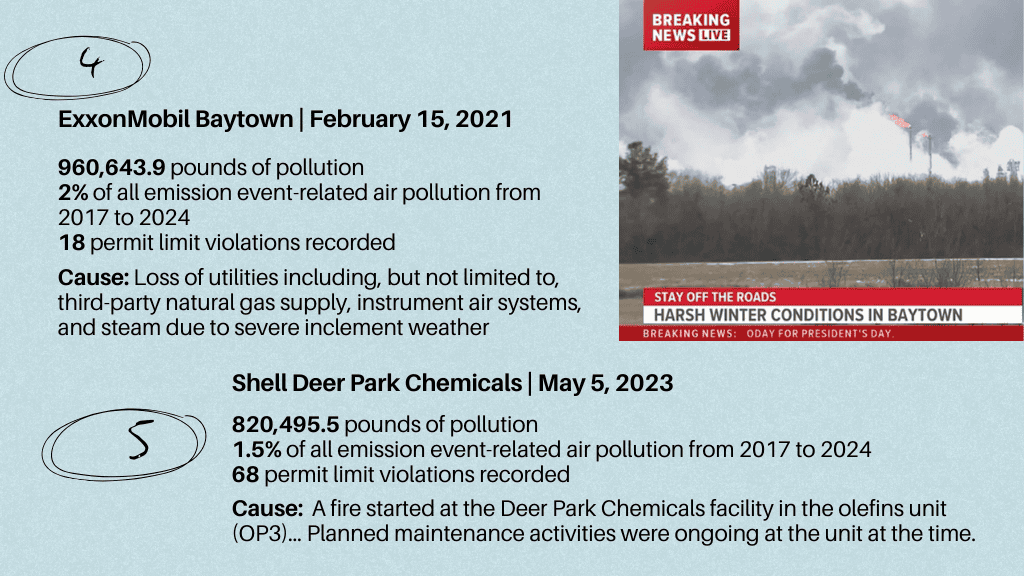
The Five Largest Emission Events
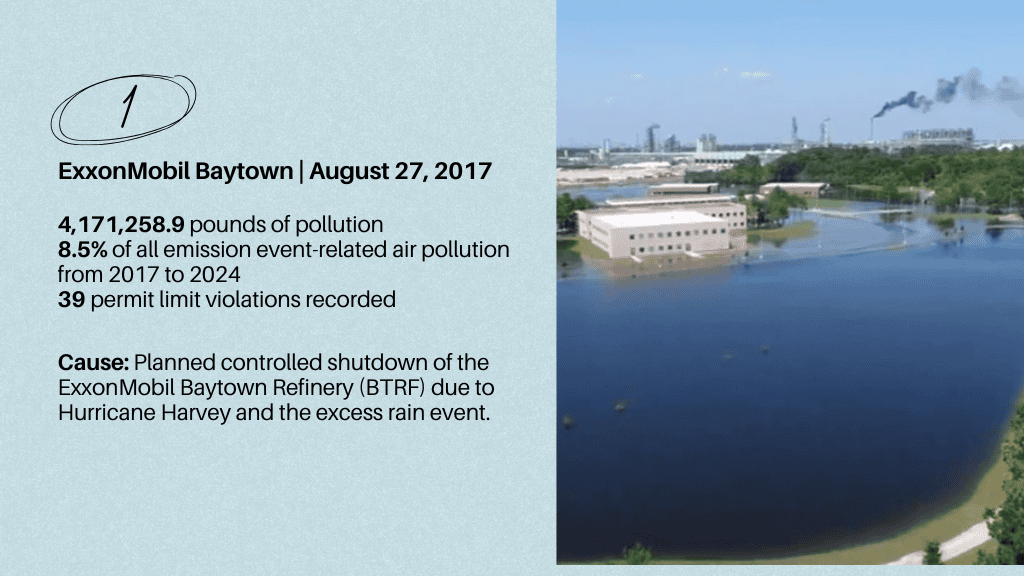
From 2017 to 2024, just five incidents were responsible for over half of the total air pollution released from emission events. Over every year of the period studied, the pollution released from the five largest emission events contributed nearly half of all pollution from emission events reported over that year.
What can you do about it?
- Speak up and mobilize your community. Share this information with your neighbors, schools, and local organizations to build awareness and collective power.
- Contact your elected representatives. Demand the Safer Communities by Chemical Accident Prevention rule (formerly RMP rule) does NOT change as it provides stronger air quality protections and better enforcement that can prevent these events from happening.
- Stay informed and ready to act. Sign up for our newsletter to get updates on air quality issues, upcoming permits, and opportunities to take action in your area.
In the event of a chemical emergency…
- Bring family and pets indoors and listen to local radio or TV stations for instructions and updates.
- Follow the instructions of local emergency officials.
- Grab your 3-day supply emergency kit.
- Gather important personal items and documents.
If told to evacuate:
- Wear full coverage clothing and sturdy shoes.
- Take your pets with you.
- Use the travel routes specified by local authorities.
- Maps of your area, preferably waterproof and non-digital.
If sheltering-in-place:
- Turn off air conditioners, heaters, and fans.
- Seal windows and doors.
- Go to an interior room without windows.
- Remain indoors until alerted by authorities that it is safe to exit.
For more information, go to:
Check out some of our other research and reports regarding emissions in Houston/Harris County: