
Dr. Inyang Uwak, DrPH, MPH, MD
Research and Policy Director
This series is in conjunction with our latest report, "Emissions Events in Harris County, 2017-2024."
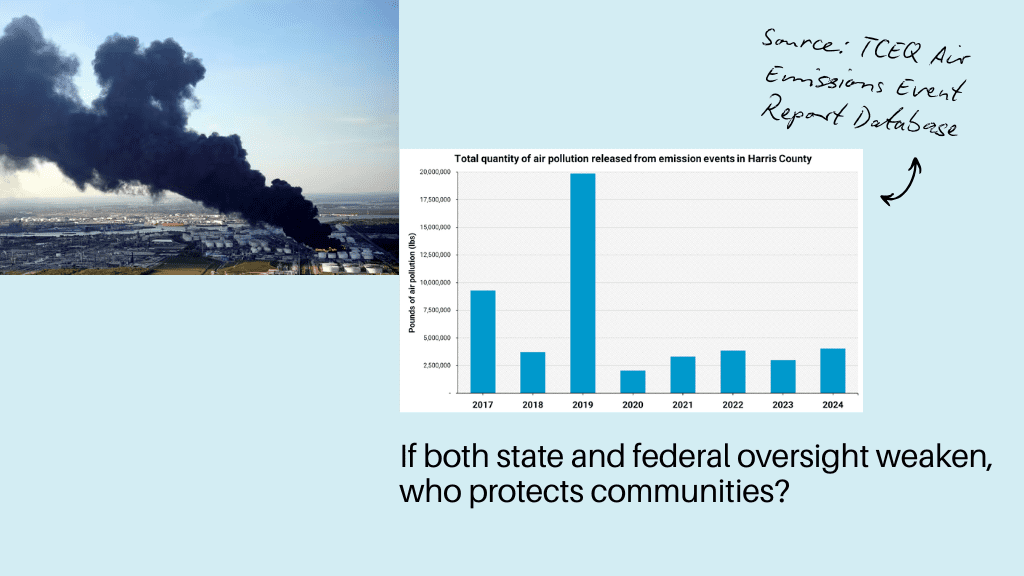
If both state and federal oversight weaken, who protects our communities?
Accountability Is Public Safety
From 2017 - 2024 in Harris County:
- 1,735 emssions events
- 6,349 permit limit violations
- More than 91% of facilities that reported an emission event recorded at lease one exceedence
- 97% of violations by large industries go unpunished.
In 2026, federal protections under the Risk Management Program are being reconsidered.
How this RMP Rollback Impacts Houston
Greater Houston has:
• 252 RMP facilities
• 75% of residents live within 3 miles of one
Houston already recorded 49 million pounds of emission event pollution in 8 years. This is the largest petrochemical corridor in the country.
Weatherization that honors climate realities
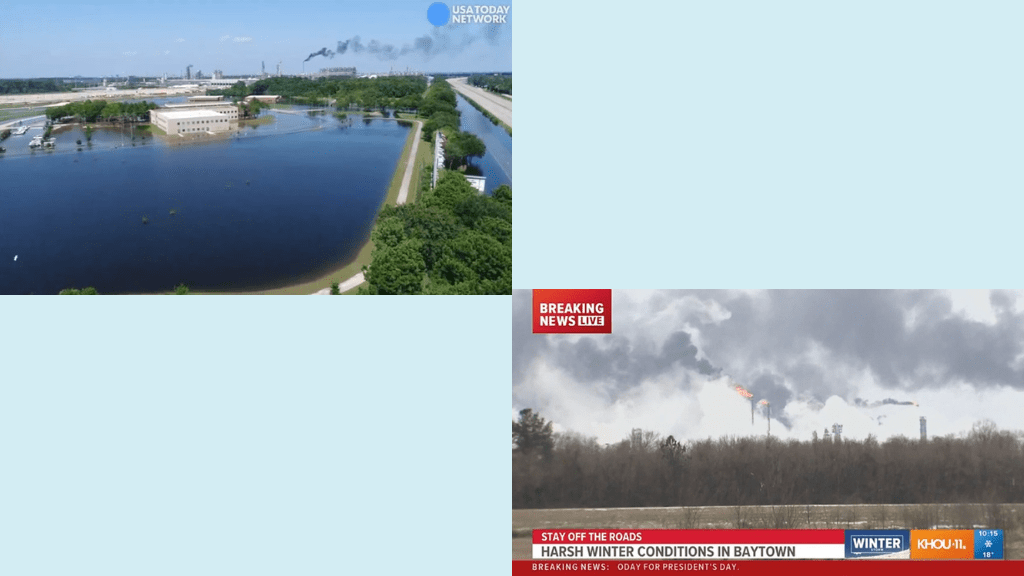
Hurricane Harvey. Winter Storm Uri.
Flooded tanks. Collapsed roofs. Power-loss.
Extreme weather caused some of Harris County’s largest emission events:
4+ million lbs — ExxonMobil Baytown (Harvey)
2.5 million lbs — Magellan (flooded tanks)
~1 million lbs — Winter Storm Uri (power loss)
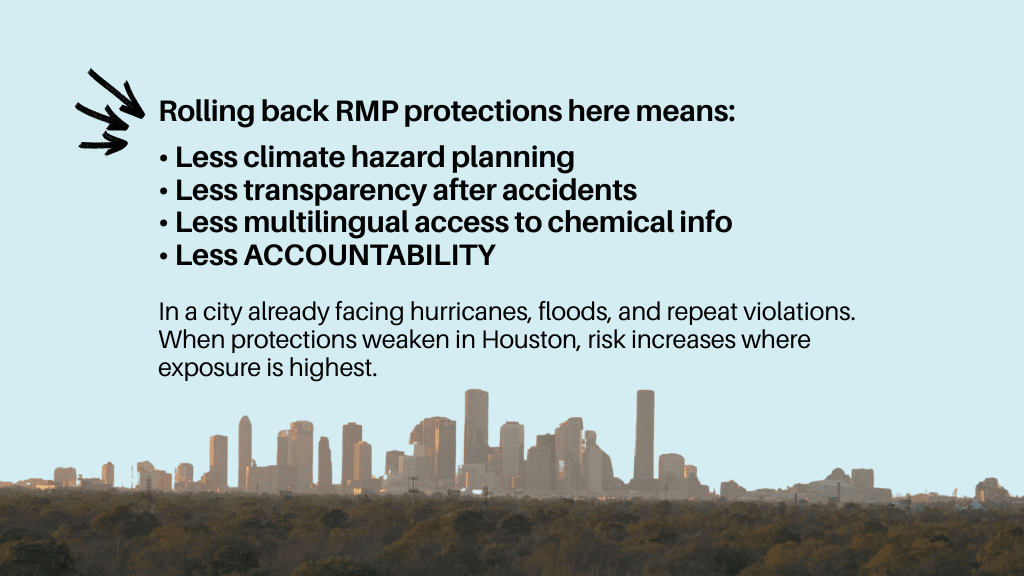
The 2024 RMP rule required:
✔ Climate risk analysis
✔ Backup power for monitoring
✔ Safer technology review
✔ Power-loss and siting evaluation
Rolling that back ignores the evidence.
We are in a federal deregulatory season
But this decision is NOT final.
EPA must accept public comments before finalizing the rule.
Submit a public comment opposing RMP rollbacks today!
Comments are due 04/10/2026 at 11:59 pm EST
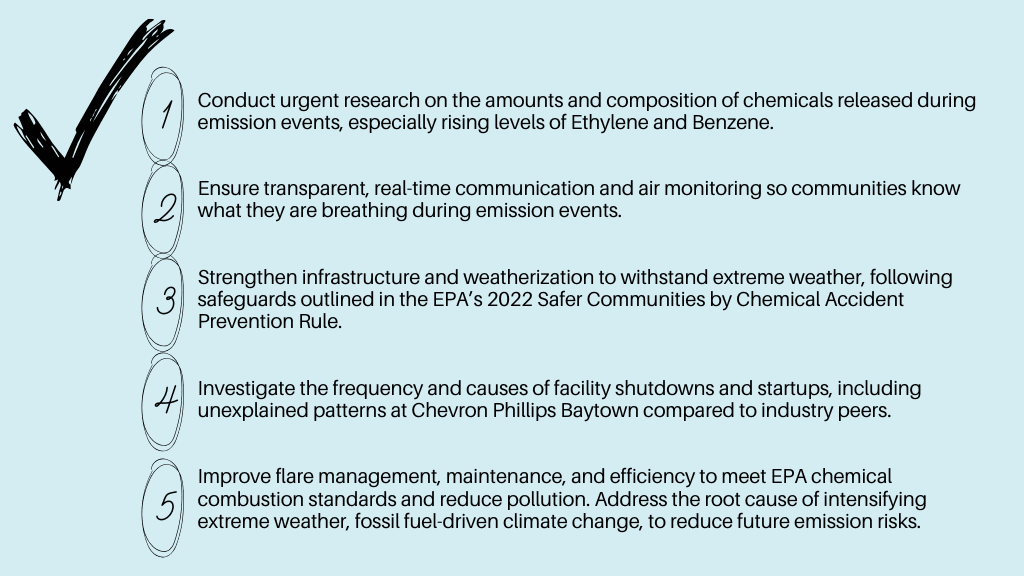
What enforcement should look like
What can you do about it?
- Speak up and mobilize your community. Share this information with your neighbors, schools, and local organizations to build awareness and collective power.
- Contact your elected representatives. Demand the Safer Communities by Chemical Accident Prevention rule (formerly RMP rule) does NOT change as it provides stronger air quality protections and better enforcement that can prevent these events from happening.
- Stay informed and ready to act. Sign up for our newsletter to get updates on air quality issues, upcoming permits, and opportunities to take action in your area.
In the event of a chemical emergency…
- Bring family and pets indoors and listen to local radio or TV stations for instructions and updates.
- Follow the instructions of local emergency officials.
- Grab your 3-day supply emergency kit.
- Gather important personal items and documents.
If told to evacuate:
- Wear full coverage clothing and sturdy shoes.
- Take your pets with you.
- Use the travel routes specified by local authorities.
- Maps of your area, preferably waterproof and non-digital.
If sheltering-in-place:
- Turn off air conditioners, heaters, and fans.
- Seal windows and doors.
- Go to an interior room without windows.
- Remain indoors until alerted by authorities that it is safe to exit.
For more information, go to:
Texas is one of the least regulated states: Accountability + Policy, Pt. 5
Statement from Air Alliance Houston on EPA Rollback of the Endangerment Finding
Most Emission Disasters Didn’t Have to Happen, Pt. 4
- 88% of All Unauthorized Pollution Came From Just 12 Facilities, Pt. 2
The Truth about Emissions Events: Naming what is really happening in Houston, Pt. 1
- Houston’s Dirty Dozen: a report on the top industrial polluters.
- How Industrial Emissions in Harris County Impact Asthma Rates and Excess Deaths
- Air Alliance Houston’s Full Research and Report Library